Wednesday, January 9, 2013

Friends of Mike Porco LIVE at The Gaslight 2012


David Amram Quartet 12.15.12
(Photo Sidney Danz)


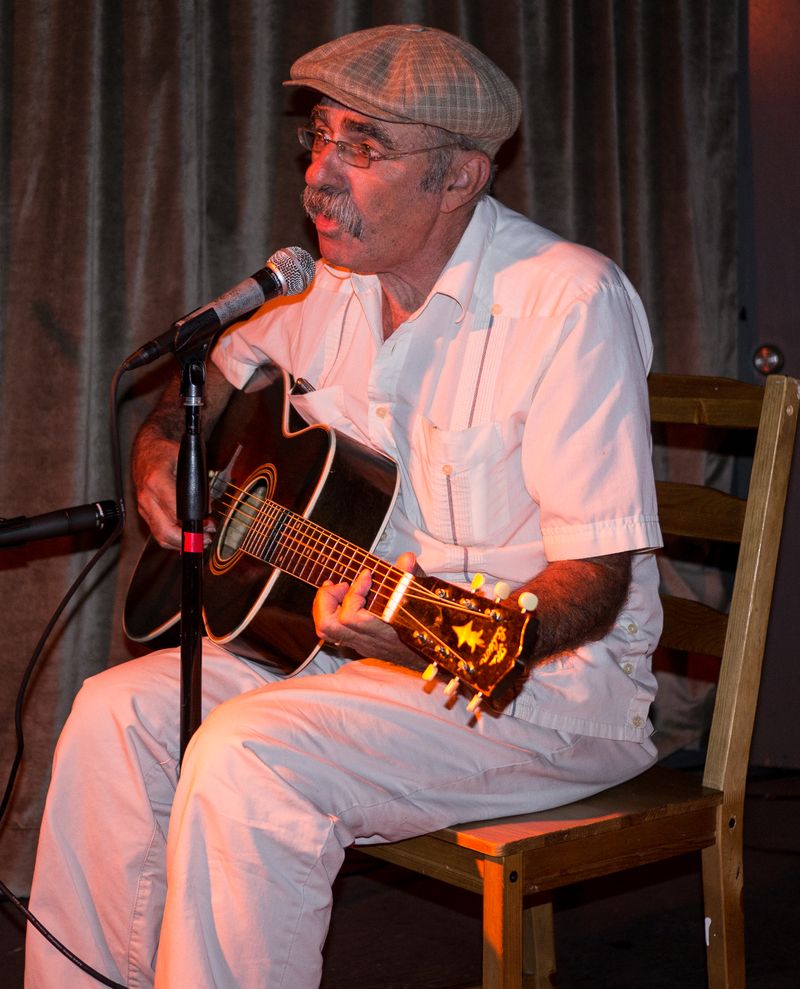
Frank Christian 10.27.12


Alana Amram and the Rough Gems
with Vince Martin
2.25.12

Tom Pacheco 2.25.12
Erik Frandsen 3.24.12
with Kate Sland
Oscar Isaac 3.24.12


John Goodman with Oscar Isaac


Randy Burns 4.28.12
(Photo Frank Beacham)


David Massengill 4.28.12
(Frank Beacham)

Randy Burns, Bob Porco, David Massengill
(Frank Beacham)


Roy Bookbinder 5.26.12
(Photo Frank Beacham)
Stefan Grossman 5.26.12
(Frank Beacham)

The Dirdy Birdie Jug Band 6.23.12
(Frank Beacham)

Zoë and Peter Stampfel 6.23.12
Judy Gorman 7.28.12
VAGABONDO! movie premiere 7.12.12
with Vince Martin

Rod MacDonald 8.2.12
with Randy Burns, Mark Dann
(Frank Beacham)


Jonathan Kalb 8.25.12
(Frank Beacham)

Paul Geremia 8.25.12
Steve Katz and Danny Kalb 9.22.12
(Photo Sidney Danz)
John Kruth, Steve Katz, Danny Kalb 9.22.12
(Sidney Danz)

Vince Martin, Bob Porco
Mike Porco Tribute 10.27.12
(Frank Beacham)


Ted Lyons, Sally Spring 10.27.12 

POEZ 10.27.12

Sally Spring 10.27.12

Louise Mosrie 11.17.12


Cliff Eberhardt 11.17.12

David Amram Quartet 12.15.12

Frank Christian
1952-2012


Saturday, January 5, 2013

FOUR O'CLOCK FLOWERS AT THE GASLIGHT


The FRIENDS OF MIKE PORCO series at the Gaslight has featured many of the original artists from the Folk and Blues Revival of the 1960s and 70s.

This January 19th, 116 MacDougal is proud to showcase a duo formed only a couple of years ago- the Four O'clock Flowers.

String master Ernie Vega and the scintillating singer Samoa Wilson perform stark versions of Country Blues, Gospel-blues, Old-Time, & Jazz classics (as well as original compositions) that are stripped down to their barest elements. Sounding like ghosts from a by-gone era, they illustrate the simple elegant power of these great songs.


Their pairing is relatively new, but they're not new to the scene.
The legendary Jim Kweskin, whose history goes back to the birth of the Cambridge Folk scene, said he revived his respected jug band and his career a few years ago for just one reason: to introduce listeners to the young vocalist Samoa Wilson. Some years later, she met Ernie Vega at the fabulous Jalopy Theater, a venue fast becoming Brooklyn's center of Folk, Roots and the Art of the Jug.

Their synergy was apparent to each other since day one. Wilson's diverse influences paired nicely with Vega's command of a broad repertoire of songs.

The duo grips their audiences right from the get-go. The heavenly vocals of Samoa Wilson and the fiery guitar and harmonica of Ernie Vega will transport you to a time when the Village was still bohemian and old-time music was all there was.

James O'Brien of the Listening Room reviewed Samoa Wilson's 1997 CD backed by the Jim Kweskin Band:

"Samoa Wilson, lithe, modern and powerfully gifted in voice, brings a cutting edge vision to the ensemble. There is, conversely, something about her presentation that defies the moment." 


~~~~~~~~~~~~~~~~~~~~~~~~~


I really couldn't think of a better way to wrap up the first year of the FRIENDS OF MIKE PORCO series. After all, it's about connecting generations with the power of song. SAMOA WILSON and ERNIE VEGA are worthy torch bearers for the future of the NEW Greenwich Village scene. Please come and enjoy!!

FOUR O'CLOCK FLOWERS
with special guests
116 MacDougal St, NYC
January 19, 2013
7PM
Jim Kweskin and the Four O'clock Flowers at 116 MacDougal
The Gaslight, NYC


Monday, December 24, 2012

FRANK CHRISTIAN - A man with no equal


A word from Lisi's heart...


'RIP: Frank Christian, of sudden pneumonia, brilliant international singer-songwriter based in NYC, writer and singer of "Where Were You Last Night?", member of original creative renaissance of Folk City and Cornelia Street troubadours and bohemians of the late 70's through 80's and continuing now, a true friend, the consummate gentleman, a reliable and sardonic cheerer-upper even when his own spirits flagged. He always had a good word, a bon mot, a spontaneous joke, a sly wink and considered thought for each person. He was suave, sweet, had impeccable grace and manners and felt things deeply. What a talent. Played on Nanci Griffith's Grammy-winnning CD, backed Odetta and made his own series of incredible jazz-tinged, virtuoso CDs. Insightful thinker, serious when appropriate, man of conscience, smart as a hoot owl in the highest rafters of this barn-with-its-roof-blown-off of ours, this soulful and eternal collection of cosmopolitan chuckle-makers, visionaries and poets. Oh, Frank. We love you. You are the best and we miss you.'

Odetta, Frank Christian, Folk City (Photo Teddy Lee)

Sunday, December 9, 2012

DAVID AMRAM AT THE GASLIGHT 12.15.12


David Amram at the Folk City 50th Anniversary


There are few people who can say they've performed and collaborated with the best musicians and artists on Earth. If we were to narrow the list based on diversity alone, one man would stand alone: David Amram

As a young man, jam sessions hosted in his basement apartment have included Charlie Parker and Dizzy Gillespie. He's rapped with writers from Kerouac to McCourt. He's played with everybody from Bob Dylan to Willie Nelson to Thelonious Monk. He's learned songs and beats from people of Native Nations to Tito Puente. 

NO PERSON can give firsthand accounts of their time spent within the multitude of cultures, musical genres and artistic movements like Mr. Amram can. 


Here are a couple of videos to prove it:

David Amram with Dizzy Gillespie:

David Amram on NY1:

David Amram at FarmAid:

Amram has also composed the score for such feature films as 'Splendor in The Grass,' 'The Manchurian Candidate' and he collaborated with Jack Kerouac on the landmark 1959 documentary 'Pull My Daisy.' He was the first composer-in-residence for the New York Philharmonic chosen by Leonard Bernstein, himself.

He's been around the world and back only to come back to Greenwich Village this Saturday!!

~~~~~~~~~~~~~~~~~~~~~~~~~

David is sure to be joined on stage by his son Adam on percussion. Two generations of Amrams will play together at the famous Gaslight, the same club where Jack Kerouac burst on to the scene beside the elder Amram. 
This is not your ordinary show because this is not your ordinary venue.


Originally a poetry café, The Gaslight was converted to an acoustic music venue as the 50s became the 60s.

Former Gaslight owner Sam Hood was quoted reminiscing about performances like…
"Ramblin' Jack Elliott…. and the night Johnny Cash stopped in to do a guest show and Joan Baez singing along with a Doc Watson hymn and then, seven years later, singing along from the audience with Kris Kristofferson. There were a thousand things like that. And the nights when Bob Dylan would come in to work out a new song, to try it out in front of an audience."

Those were the days, but those days are not entirely gone.

My grandfather, Mike Porco, owned Folk City, a club that hired many of the same acts that appeared at the Gaslight.

Clubs like Gerde's Folk City, Café Wha? and the Gaslight helped usher in the scene that became known as the Greenwich Village Folk and Blues Revival. 

And now, The Gaslight at 116 MacDougal Street has invited them all back down to the cellar to make those walls rattle again.

FRIENDS OF MIKE PORCO Presents THE DAVID AMRAM QUARTET live at The Gaslight
116 MacDougal St, NYC
Saturday, December 15th
7PM

It's a euphoric drug of a show with HOT JAZZ, LATIN BEATS AND WIDE SMILES. The only necessary ingredient is your presence. The David Amram Quartet will handle the rest. 

Hope to see you there!

Sunday, December 2, 2012

AL ARONOWITZ remembers the Gaslight


Excerpt from COLUMN SIX, FEBRUARY 1, 1996, © 1996 The Blacklisted Journalist


Sam Hood left early. He took one of the slats of the swinging doors as a souvenir, climbed up the uneven stone steps to the sidewalk, went into the bar next door and proceeded to get drunk. The bar next door was the Kettle of Fish, once famous as a local Mafioso hangout but, by this particular night, it had long since been overrun by every guitar-picker who had ever migrated to Greenwich Village. This was the night of April 5, 1971, and Sam had left the Gaslight for the last time. The Village Gaslight. That was the club's official name. Some people liked to call it the Gaslight Cafe. For thirteen years, it had been one of America's leading folk music clubs, a Mecca for every kid who ever had picked up an acoustic guitar and tried to sing a Woody Guthrie tune.

"I didn't want to get maudlin or anything," Sam told me afterwards. "I didn't even stay for the second show. Not a whole lot happened. I didn't want to celebrate it."
The Gaslight was at 116 MacDougal Street, with its twin entrances at the bottom of a pair of deceptive stone stairways, located on either side of the flight of steps leading to the shops above. The past fades fast. Walk past that address today and there isn't a clue that 116 MacDougal Street was a landmark where music archaeologists ought to start digging. I had to go through some double-takes and I even had to ask people on the block if that was the right address. Hardly anyone knew. It was January 13, 1996, soon after the Blizzard of '96 and there was too much snow for me to tell if the stone steps were still uneven. In the old days, there were six stone steps down in the stairway at the building's right and nine stone steps down in the stairway at the building's left. At the building's left, the steps now lead down to what used to be a boozery called "The Scrap Bar." On the building's facade above those stone steps, the Scrap Bar had once hung a motorcycle as a decoration. Yes, the past fades fast. I still remember how John Mitchell had opened the Gaslight and how Sam Hood had closed it.John Mitchell was a celebrity on the MacDougal Street of the late '50s. Greenwich Village already was long established as America's Left Bank, where the rents were still cheap enough for starving artists and runaway kids and where Italian bars and restaurants shared the street with silversmiths and sandalmakers and dress designers. Picturesque MacDougal Street was turning into Boutique Row. It already had won fame as a hangout for America's avant-garde and its sidewalks were always full of suburban middle class hordes, arriving like sight-seeing tourists coming to behold the Grand Canyon. This was when the painters and poets and other arty types were still called Bohemians. This was when the Village became my beat for the New York Post.


The Scrap Bar, 116 MacDougal St 1996


By the late '50s, MacDougal Street was as bright and booming and fabled and flourishing as a carnival midway, and I would have to look in the New York Post files to remember all the ways in which John Mitchell manipulated me to get a story in the paper so he could effectuate some scam. He was a leader in the movement to keep the real estate interests at bay when they tried to chip away at the outre population's elbow room in the Village. I liked him because he was always so colorful and therefore always good for a story. He disappeared from the Greenwich Village landscape long ago, remaining a local legend only in the memories of survivors like myself. Somebody researching those days will keep coming across John Mitchell's name again and again. He still has a dynamo of a daughter, Christine, a mother of two and a 37-year-old college student majoring in English literature in upstate New York. The subject of an article about children of the Beats in the New York Sunday Times magazine section of last November 5, she was quoted as saying:

"I think the Beats were extremely dysfunctional people who basically had no business raising children."


Christine's mother was the late Alene Lee, a longtime friend of mine, who did her best to remain unsung as one of the great legendary figures of the Beat Generation. Although Jack Kerouac turned his interracial romance with Alene into a best-selling novel called The Subterraneans, she avoided attention by winning the hearts and the friendship of all the journalists best equipped to write about her (such as me or Lucian Carr, Jack Kerouac's good buddy, who ended up Alene's longtime lover). But Alene is a whole other story, which maybe I'll tell you some other time.As for John Mitchell, I remember him as a master carpenter, a star con man, a resourceful innovator, a proud individualist and a cagey entrepreneur who helped establish the coffee house as a Greenwich Village countercultural institution, a peculiarly '60s phenomenon, a hangout that catered to the sweet tooth rather than to the drunken or unruly. The coffee house proved to be just the place to attract a generation of peaceful potheads. For the middle class, it was either pastry and a hot chocolate with the arty types in the Village or TV and Sara Lee alone at home.

John used to say that he discovered the Village while driving to visit friends who lived on Elizabeth Street, on the other side of the Village. He never told me where he had started out from. When he got to Bleecker Street, with several blocks still to go, one of his tires blew. John told me that he never made it over to Elizabeth Street because he liked where he was. That's how Greenwich Village attracts a lot of people. John got to be buddies with a poet who became one of the Village's greatest legends. The poet's name was Maxwell Bodenheim, and Maxwell Bodenheim and John Mitchell became roommates, odd-couple style. John used to boast that he knew everything there was to know about construction. He also had a great way of persuading everybody he was telling the truth.


John's first major undertaking was the Figaro, a coffee house at the corner of Bleecker and MacDougal. The Figaro became a big-time hit overnight, allowing John to sell it quickly for what he claimed was a whopping profit. It was certainly enough of a score to prompt John to try it again. This was in 1958 and, after selling the Figaro, John immediately began scouting MacDougal Street in search of a location for another coffee house. He'd already decided to call it the Village Gaslight. At 116 MacDougal, John noticed that there were gratings in the sidewalk. That told him there was a cellar underneath, but when he went downstairs to take a look, he could hardly stand up. The ceiling was too low. John couldn't raise the ceiling, so he lowered the floor. It was all dirt, and he shoveled it out by hand. Except, the city refused him a building permit, and so he had to load the dirt in sacks and get rid of it as if he were tunneling his way out of prison. At night, he would carry the sacks out into MacDougal Street and dump a little dirt into each of the garbage pails on the block. The Gaslight had a hard time being born.

The Village Gaslight started out as one of the first of the Village's basket houses, so-called because the entertainers got paid by passing a basket through the audience. The basket houses represented a new twist to the coffee house concept by offering poetry along with the pastry. 

This was in the Beat Generation days, predating the folkie tidal wave which later rolled in with Joan Baez and Bob Dylan riding its crest. This was in the Beat Generation days when Allen Ginsberg and Gregory Corso read their poetry at the Gaslight. Hugh Romney also read his poetry there and then reappeared as another persona, Wavy Gravy, the legendary clown, comedian and founder of the communal Hog Farm. Len Chandler also started out as a poet at the Gaslight before he became the biggest folk music star MacDougal Street had ever seen until then. One of the Gaslight's MCs was Noel Stookey, who later became the Paul of Peter, Paul and Mary. Paul's first gig was at the Gaslight. This was in the days when every truck driver would holler, "Hey, beatnik!" at every man wearing a beard. This was when beer-drinkers from Jersey would look for Saturday night entertainment by driving into the Village to beat on beatniks. This was when MacDougal Street was still a Little Italy and the small kids, young hoods and old toughs on the block would drop water bombs from their upper tenement windows onto the clogged sidewalk traffic below. The cops kept trying to close down the Gaslight. They wrote summonses because there was no soap in the bathroom or because there were no lids on the garbage pails. When the neighbors complained about the noise in the Gaslight, the audience was asked to applaud by snapping its fingers.


John Mitchell sold the Village Gaslight and then helped build the Commons, another coffee house, just across the street. Later, he rebuilt the Commons, renamed it the Fat Black Pussycat and sold that, too. At first, he went looking on MacDougal Street for a site where he could build another coffee house but instead he left the country. As I said, the past fades fast. Years later, John Mitchell was living the life of an expatriate in Spain. Clarence Hood, meanwhile, had bought the Gaslight in 1961. Clarence knew what it was like to be a winner and he knew what it was like to be a loser. He had been a self-made millionaire three times and he had gone broke three times. The Beat Generation was about to be supplanted as the relevant expression of culture by The Great Folk Revival. Clarence's son, Sam, later told me that Clarence had no idea of what he had gotten into or what he was doing.

"All my father knew was the lumber business," remembered Sam Hood. "He had also been in citrus fruits. He was a Democratic committeeman in Mississippi in 1949, but he was involved in the fight for Truman's civil rights program. Things got a little uncomfortable, so we left Mississippi. When my father took over the Gaslight, the place just ran itself."
The night the Gaslight closed in 1971 was, for Sam, like a death in his family. Still, how could he mourn a place where the pipes always leaked? Sam said he'd spent a fortune on plumbers trying to find out where the water was coming from. One of the leaks was right over the spot on the stage where the performer was supposed to stand to remain in the exact aim of the prefocused battery of fixed spotlights. I, myself, remembered noticing that John Hammond Jr., for one, and James Taylor, for another, had gotten all but drenched in the middle of their sets. If they'd been playing electric guitars, they would've been electrocuted. The truth is that John Mitchell wasn't much of a master builder after all. Not only were the twin stone stairways up to the sidewalk grossly unalike, but each stone step seemed to be of a different height. I used to marvel that no one ever tripped, fell and sued.

At first, Sam got involved with his father in running the Gaslight but then went to Florida to open his own club. Without Sam to help him, Clarence decided to close the Gaslight in 1967, shutting the club's doors with a big, though premature, ceremony. A new owner, Ed Simon, reopened the Gaslight in 1968 and, before long, Sam, at first reappearing as Ed Simon's partner, eventually wrested control of the club back. Sam thought Ed was running the place too much like a tourist trap. Sam was so successful in reviving the Gaslight that, two years later, he decided to close it for the last time.
There were hot, sweaty nights when the air conditioning would break down. Even when the air conditioning worked, condensation would rain from the ceiling. The legal capacity was a hundred and ten persons, but Sam remembered that when James Taylor played the club, Sam packed two hundred and twenty customers into the Gaslight.

There was a time when Sam closed the Gaslight at its 116 MacDougal Street location and reopened the Gaslight two nights later at its new site on Bleecker Street where the old Cafe Au Go Go used to be. At its new location, the Gaslight seated 320. With that capacity, the transplanted Gaslight thrived for about a year, but Sam's personal life eventually forced him to close that place, too. As for 116 MacDougal Street, Sam remembered:

"At first, I wanted to have a big party. I thought we'd have a gigantic celebration and move the whole show over to the new place in the same night. But then, as the day got closer, I got kind of scared of any kind of things happening. In the last two months, the club had never done better. I had to move it because it was totally stifling us. To continue there meant we had to continue presenting performers limited by the confines of the place. I don't know what's going to happen to the old club. There's so much music in the walls there that somebody will have to do something with it."
Music in the walls? It was such a dirty, crumbly decaying place that at first Sam's image made me think of music infesting the walls of the old Gaslight like tuberculosis bacilli surviving in the walls of a slum tenement. But after a while, I began to like the romance of the phrase. Music in the walls? I began to think of music embedded in the walls the way music is embedded in a phonograph record. Were CDs invented at the time? How do you get to the music in the walls? How do you rediscover it? Do you dig like an archaeologist? "
I think Mississippi John Hurt put more music in the walls than anybody else," Sam mused. "I remember his second night in New York. He had just been rediscovered. He was right in the middle of a song and he walked off stage. The place was packed. I thought he was sick or something and I ran up to him. He said, 'I just had to take a pee!'And there was Ramblin' Jack Elliott and the night Johnny Cash stopped in to do a guest show and Joan Baez singing along with a Doc Watson hymn and then, seven years later, singing along from the audience with Kris Kristofferson. There were a thousand things like that. And the nights when Bob Dylan would come in to work out a new song, to try it out in front of an audience. He did Hard Rain and Masters of War for the first time in the Gaslight. Until 1965, whenever he got a new song worked out, he would stop into the Gaslight unannounced to try it out in front of an audience. I remember the night of the Cuban Missile Crisis. We closed early and sat around the big table. Dylan, Dave Van RonkTom Paxton and Luke Faust. We said it was all over, the end of the world. Everybody just played music for themselves, with no audience. Those were the best nights.
I guess everybody took his souvenir. It wasn't anything to celebrate. Nobody wanted to be there when it was over. It wasn't like going to Janis' funeral or Hendrix's funeral where somebody or something died prematurely. The Gaslight had lived its life and it was over. As a club, it was no longer workable. It had a great life and it was over."
There was music in its walls, but the Gaslight had died. The problem now was how do you bury a cellar?
116 MacDougal these days
BLOGGER'S COMMENT 16 years later:
You don't need to bury it. It's still alive and well.
Photo Jack Hirschorn


Sunday, November 18, 2012

DAVID AMRAM- 57 years in Greenwich Village


During a lush life filled with good fortune, David has done it all. He identifies himself as "a full-time composer who is also an improviser, a conductor, a free-association scat singer," but that hardly covers the range of his work.

As a young man, jam sessions hosted in his basement apartment have included Charlie Parker and Dizzy Gillespie. He's befriended and performed with nearly every Greenwich Village artist during the Folk and Blues Revival from Bob Dylan to The Roches. 
He was the first composer-in-residence for the New York Philharmonic chosen by Leonard Bernstein, himself.

He's conducted symphonies in major cities around the world and plays instruments from over 3 dozen different countries. 

David Amram has composed more than 100 orchestral and chamber music works and two operas. He's also written many scores for Broadway theater productions.

David composed the score for such films as 'Splendor in The Grass,' 'The Manchurian Candidate' and collaborated with Jack Kerouac on the landmark 1959 documentary 'Pull My Daisy.'
  
And he's still just warming up! An endless supply of goodwill and thirst for experience has driven Amram to do what he does: Inspire audiences worldwide. 

"Listening to the AM radio in the 1930s, they had jazz and symphony music coming out of the same machine," David quips. Perhaps that explains why it was natural for him to integrate his classical training with Jazz, Folk, ethnic, Native and Latin music. This blend has led him to become a common thread between a venerable tapestry of post WWII American poets, musicians and artists. 


Been there, done that. 

It's an old cliche but how can it not describe the career of David Amram?

Been there. Done that

No more room left to tell about David. Let a couple of friends sum it up:

"David Amram is a national treasure"
~Frank McCourt

"David Amram is full of terrific beatific tales!"
~Lawrence Ferlinghetti
~~~~~~~~~~~~~~~~~~~~~~~~~


On December 15th, the world famous Gaslight Cafe welcomes David Amram back to MacDougal Street. He's brought music to the far corners of the globe over the past 6 decades. He's traveled a million miles only to come back home to the Village. Join us on this special event as David performs with his quartet and special guests in the historic space that is 116 MacDougal.

Friday, November 16, 2012

TOMORROW and UPCOMING shows at the Gaslight

Tomorrow night!!!!!!!!!!!


Friends of Mike Porco LIVE at the GASLIGHT
UPCOMING EVENTS:

December 15-
DAVID AMRAM Quartet and Friends
57 years in the Village! Celebration of a man who brought music to the far corners of the globe. He traveled a million miles only to come back home.

January 19- The FOUR O'CLOCK FLOWERS
Jalopy Theater standouts play for all the marbles. You miss them, your loss. Like clockwork, the new Gaslight house band stuns the crowd every Monday with top shelf vocals and a world of talent. String master Ernie Vega and the scintillating Samoa Wilson cook up Roots, Gospel, Blue Salvation and standards.

February 16-    ALANA AMRAM and the ROUGH GEMS
Brooklyn Songstress brings the jam. Vince Martin can't be far behind!
BENEFIT SHOW

March 16-
World premiere of IN THE CAN. Musical actors to beat the band. Details later.

4.20- Special Guest st*r

May 18- Freewheelin Jam. Several artists performing live at the Gaslight to play the entire album.
50th year since the release of "The Freewheelin Bob Dylan." Should be a doozy.

June 16- TOM PACHECO
Headlined the first show in this series Feb '12. Few can touch his songwriting prowess.

******Other shows mixed in as they materialize

Thursday, November 1, 2012

NEW SHOW ANNOUNCED LIVE AT THE GASLIGHT


Folk Troubadors LIVE at the Gaslight Cafe, NYC

At a young age Cliff Eberhardt knew he was going to be a songwriter. His Dad introduced his children to music and Cliff quickly taught himself to play guitar. He also had the good fortune of living near a venue where James Taylor, Joni Mitchell, Howlin' Wolf, Springsteen, Muddy Waters, Bonnie Raitt and Mississippi John Hurt performed though out the year. At home, his parents exposed him to standards by Cole Porter and Ira Gershwin. As an adult, he learned how to blend all these influences to make his own unique sound. 

Cliff moved to NYC in 1978 and began playing in all the great Greenwich Village clubs. Time well spent at Gerde's Folk City, run by Mike and John Porco, proved how New York was an "ideal musician's boot camp." Gerde's was the legendary club where musicians had congregated for many years to create music together, promote each other to new heights and learn from the masters passing through. 

Eberhardt became a professional in a Village that had a vibrant and supportive music scene. Cliff and other luminaries like John Gorka, Suzanne Vega, Lucy Kaplansky, Julie Gold, Steve Forbert, Christine Lavin, and Shawn Colvin stood shoulder to shoulder and recorded music on a monthly basis. Later in his career, his voice was heard by millions by doing vocals for Coca-Cola, Miller Beer and Chevrolet commercial spots on TV and radio. His recording career has been committed to his original songs. It's a catalogue of sincere ballads and swaggering stories that draw sincere emotions from his audiences, attributed mostly to Cliff's sincere delivery and musicianship. 


Award winning Nashville artist, Louise Mosrie (pronounced "MAHZ-ree"), has also toured extensively since deciding to become a serious songwriter. 

Born in Delaware and moving to the South as a child, Louise began writing Pop/Folk songs in her early 20s while living in Knoxville where she's produced two independent albums. Her latest release, "Home,"  featured a #1 Song & was the #1 Album on the Folk DJ chart. Her original songs combine Americana, Bluegrass and Folk melodies that tell stories of the joy, love and struggle of the deep South. Through the use of vivid characters and scenery, she creates a world of Southern life in lush detail.

Mosrie has been named Rocky Mountain Folk Festival Showcase Artist in 2012, Falcon Ridge Folk Festival Emerging Artist of 2011, winner of the Wildflower! Festival Performing Songwriter Contest in 2010 and winner of the Kerrville Folk Festival New Folk Songwriting Competition in 2009.

Louise is an emerging star building a National audience. You don't want to miss her! 

Please join us this month at the famed Gaslight Café as we welcome two Road Warriors to a club where their craft is king. At a time when New York needs to heal, music becomes more than entertainment. 

Advance tickets on sale: