Monday, August 29, 2011

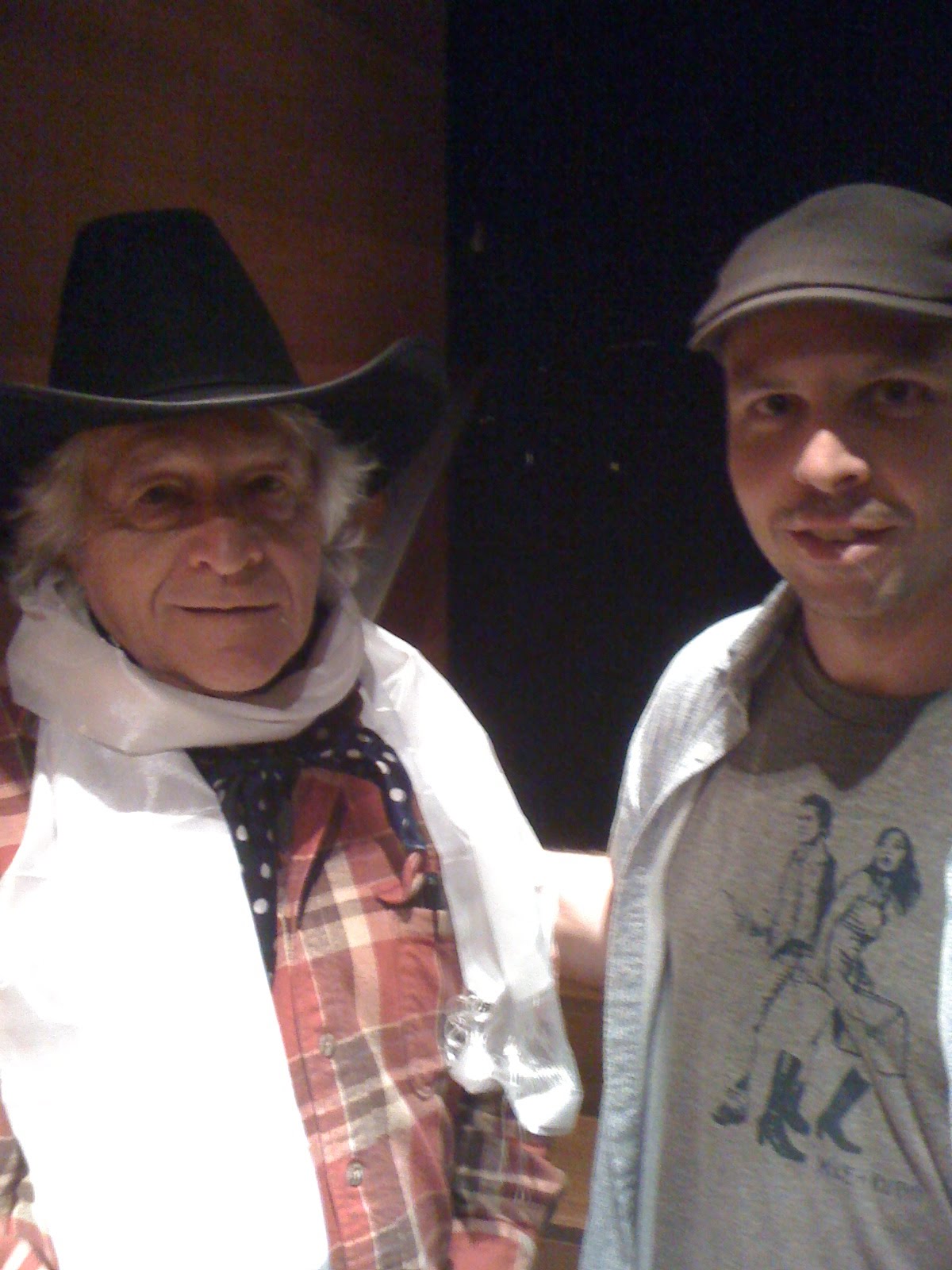
BROTHER BruBru AKA MR. TAMBOURINE MAN


"There's a misunderstanding about me...truth is," he says as his eyes widen, "I don't like hanging out with musicians."

The joke goes over well as all in the room have a good laugh at the apparent untruth. "They act as if there is nothing left to learn. They feel that since they have this gift, that they're closer to God. Not me, of course," he adds as a punchline.  

History shows quite the opposite was true in the case of Bruce Langhorne. He has, arguably, made more diverse and profound connections than perhaps anyone of his contemporaries from his heyday in New York's Greenwich Village. John Sebastian may dispute that. And maybe Bob Dylan. Or Mark Dann. But Brother BruBru, as he was later known, has performed and recorded with some of the most talented and outstanding giants of his era. He would later arrange and produce albums for other legends. He wasn't invited into the studio or to play on stage just because he was a "nice Negro." It was because he was a stellar musician and steadfast friend to all he encountered.

~~~~~~~~~~~~~~~~~~~~~~~~~~~~~~~~ 

Langhorne was a musical virtouso since he was a child growing up in Upper Manhattan. His violin career ended at age 12 after an incident with a cherry bomb that he held in his right hand an instant too long. His musical life thereafter was a matter of being at just the right place at just the right instant. 

That place, of course, was Gerde's Folk City. 

When he got older, he spent many days and nights playing along with other musicians in Washington Square. His musical career took shape when he was introduced to Brother John Sellers. Sellers had become the regular Emcee at Gerde's during its infancy. He was primarily playing spirituals, Roots Music and Gospel during his regular sets at Folk City. Bruce eventually would sit in with Brother John as his able accompanist. His name and unique picking style started to become better known from the exposure he gained as a young man at Gerde's. As part of his extensive repertiore, Brother John also liked to play some stripped down contemporary Folk covers and it was at that time when Bruce remembers a surge in demand for his presence on stage.

"People started asking me to join them on stage to play with them 'cause I could play almost anything. Brother John was always there. I was always there and we basically became the house band for Gerde's. I was just a kid. I had the time of my life."

Some of that time was spent holding up the bar at Gerde's. The other side of the bar was usually occupied by my Grandfather. In the early 60s, Folk City was the only place to go to see and hear the legends of the Blues and continually provided crowds with the new voices of Folk.

"Gerde's was where I met almost everybody. Bobby, Joanie, Dennis Fariña, Carolyn Hester. I spent a lot of time off stage with them, too."

~~~~~~~~~~~~~~~~~~~~~~   

Soon, Bruce Langhorne was billed as the accompanist with fan favorites Tommy Makem and the Clancy Brothers. Within several months, he would join Texas Songbird Carolyn Hester in the studio for her 1961 release on Vanguard. A newbie guitar player from Minnesota had befriended Hester in Boston just around that time and expressed a desire to play with her. Since she already had Bruce lined up to play guitar on her next record, she asked the boy if he'd be interested in playing harmonica in New York when the time came. The man-child was Bobby Dylan and the bassist on the album was Bill Lee, father of Spike. Ms. Hester thinks this may have been one of the first intergrated Folk recording. It certainly was Dylan's first time on vinyl. Dylan and Bruce would collaborate some years later. But that's another story. 

Bruce remembers the solid vibe at Folk City and attributes it to the Old World feel given to it by its owner, Mike Porco. Bruce still holds a soft spot in his heart for Mike.  

"Mike was a wonderful guy," he gushed. "The rest of the world was dealing with Black and White but there was NONE of that in there. We would sit at the bar and we'd all just talk and it was like a meeting of the minds."

In fact, when Martin Luther King Jr. made his "I have a Dream" speech, it was Bruce, Len Chandler, Dylan, Baez amongst others who have been credited with warming up the crowd on the mall in Washington, DC. 
  
In the mid 60s, Bruce was invited to play in the studio with old friend, and by now, superstar Bob Dylan. Some outtakes that he recorded with Dylan for the "Freewheelin'" album surfaced decades later but he was it was his lead guitar work on 1965's seminal Folk-Rock defining album Bringing it All Back Home that has stood the test of time. And, as has been spelled out in so many words by the man himself, Bruce IS Mr. Tambourine Man. 

But a man can't build a career on inspiring other artist's song titles. He had become one of the most sought after and, subsequently, historically important musicians during the genre's transition from Folk to Folk-Rock. Not only an acclaimed "session" artist, his ability to perform live is what separated Bruce from the thousands of aspiring artists in the Village. From his exposure gained at Folk City, he earned opportunities to play with The Clancy Brothers, Tom Rush, Richard & Mimi Fariña, John Sebastian, Richie Havens, Gordon Lightfoot, Eric Andersen, Peter Yarrow, Fred Neil, Joan Baez, and Buffy Sainte-Marie. He also played on some other instruments during studio sessions and performed live with Bob Dylan, Judy Collins, the Fariñas, and others. He produced Ramblin' Jack Elliott's album Young Bringham and has also done soundtrack work, including scoring Peter Fonda's movie The Hired Hand. There is hardly a more star studded resumé.

One of his more outstanding memories was being asked...more like told...by John P Hammond to not sit in with everyone on stage and to just sit down and LISTEN. "And he was right! The show became more enjoyable to me."

He also remembers time spent with another fellow guitar virtuoso. Bruce was at Folk City in 1962 when Bronx kid José Feliciano became a hit sensation at the cabaret. As one would expect, the notoriously gregarious characters became fast friends. He remembers sitting around with José one day when they were both commenting on their respective handicaps. "And José says, 'You play pretty good for a guy with no fingers' and I said, 'You play pretty good for a guy who can't see shit!'"

Bruce was able to make a living playing music, something he thought was astounding. He even worked his way to a nationwide audience with a live appearance on NBC, but that didn't stop him from having a little fun with it.     

"I'm told that there were some people in my building who liked hash," says Mr. Langhorne with a wry smile. A thumb-sized hash chunk somehow made it into his apartment where his mates indulged just before their network television performance. "And one of my friends said, 'hey we're going to be stoned on live TV in front of 6 million people!' I thought that was cool!"

The story, of course, is told a bit out of context and incomplete. Brother BruBru doesn't remember if it was Bobby or someone else he appeared with on Les Crane's show, but the story is funny nonetheless and shows Bruce's real ambition; it wasn't to make it "big" as fast as he could. He just wanted to play good music and have a good time doing so. His skill and zest for life seemed to line up his career opportunities for him.   

~~~~~~~~~~~~~~~~~~~~~~~
I never had the urge to ask Bruce about Dylan. I really don't need to know "what HE was like" in the studio or at the bar. The stories can be near infinite!  And 50 years later, by law, most have already been embellished over time anyway. If Bruce had outstanding anecdotes to tell, he would have told them. Most folks have all said the same about Dylan: he was funny and fun to be around. His demeanor and studio-style has been discussed and disected endlessly. I thought it would be insulting to ask Bruce about someone else when he's had such an interesting career.  

It wasn't Brother BruBru's link to Bobby that led me to him. He spent much more time with Mike Porco. It's the time he spent with Dennis Fariña and the Grandison Singers and Brother John and Richie Havens that is of as much interest to me as anybody. He helped establish the very fabric of what my grandfather's cabaret became. He brightened the dark corners of that joint with the ambient sound that the headliners required. Five decades later, Bruce still keeps the Porco name aloft in his heart. To be welcomed into his home and experience that living connection with the man himself was worth more than any faded memory.  

Sunday, August 21, 2011

Mike Porco's Cousins and Brethren.

After speaking with Vincent Porco of the Bronx, I learn of the "other" Porcos and offshoot families from the same town. My grandfather Mike Porco was a late bloomer. Many of his known relatives from Calabria had made their way from Italy to New York a generation prior.

My notepad was made from the back of an envelope.

Mike came here in 1933. Vincent's close relatives took a boat in the 1890s. Vinnie's grandfather is Anthony. He's never heard of Mike Porco although he's well aware that there's a paternal link not that far distant. His Porco heroes were the business men of the Bronx who stayed uptown and ran the speakeasies and night clubs up there. Places like the Flame, The Victoria Café on 141st and 7th, and the Palm. Not sure if it's the same Palm in the city now. But the one in the Bronx was run by the Bastones. Probable relative Joe Bastone put up the lion's share of money to open up Gerde's for his cousin Mike in 1952.

Mike's rotating cast of cousins and brothers ran Gerde's on 3rd and Mercer. Youngest brother Luigi was there at the beginning long before John came to America. They converted the fare from German to Italian. NYU forced them to relocate a block north to 4th and Mercer in '57. Music still wasn't introduced there until '59.

Vincent does remember Club 845 which was over on Prospect Ave. That was where Mike took his first real job working 90 hours for $11/week. By the time his kids were born, he was running the service from the entire 90 foot long bar. Fitzgerald, Armstrong and Ellington played there in the 1940's. Mike got to know them too but not as well as he did Dylan, Ochs and Van Ronk.

There were other families related somehow strewn all over the place. The Guara family. Bastone, Puglice (they just pronounced it POLICE) and the Reeda family. Mike's wife was a Reeda and Vincent knew another Vincent Reeda but we've never heard of him.

He also told me that his beloved Uncle Dom lives up by me in Tillson Lake. I got his number and since he spent more of his youth in West Harlem and followed the music, he'd have more to dish.

Vincent remembered the Yankee Tavern that Grandpa bought in 1965 but he never knew a Porco owned it. My Uncle Angelo ran the bar service there and was part owner. It was on 161 and River literally in the shadow of the Stadium. The Tavern, along with and half the block where the Chock-Full-o-Nuts once was, burned down to the ground in the winter after the Yankees '76 World Series loss. They would win the next two but Mike gave up the lease. His only business then was Folk City and some properties that he held with my Uncle John. Vinnie Porco says that every family has more than one John.

Tuesday, May 24, 2011

YOU'RE A BIG BOY NOW


Anyone who knows about Bobby Zimmerman knows about Gerde's Folk City. It was where he got his first big break. It was where he hung out. It was where he made a name for himself. It was where he met Baez. It was where he hung out with Suze. It was where he played his new original stuff. It was where "Blowin" was first played. It was where many of his contemporaries first met and heard him play. It was where, as John Hammond recently told me, Bobby played his best solo shows. It was his turf. Gerde's, in a way, was the House that Dylan Built. 

I've often wonder'd if Dylan and Gerde's would have been Dylan and Gerde's without Dylan and Gerde's. The answer is pretty obvious to me. Dylan would have become the poet laureate of his generation whether he was discover'd on a street corner on the Square or the Wha? or the Gaslight. Like the biological fact that all female babies are born with all their lifetime's worth of eggs within their ovaries, so to, Uncle Bobby had all his songs with him when he came to New York. They just had to manifest and present themselves in time. Bobby Z was born to become Bob Dylan.

And Gerde's....well....Dylan was one in a long string of Folk singers to launch out of there. Established troubadors and Blues giants were perfoming there way before Dylan crossed the Hudson. It's probable that he knew this fact before he left Hibbing. Since he showed up at Folk City his first possible Monday, it's likely that playing the open mike at Gerde's was part of his plan during the infancy of his New York experience.

In other words, Gerde's already had cemented its name into the foundation of American Music History pre-Bob. When Bob became too large an act to play announced gigs in the Village, Mike Porco and Folk City carried on. Future legends came to Greenwich Village to launch their careers and several more found a home at Porco's place.

The Italian eatery and bar cum New York's Center of Folk Music would have drawn crowds and a new breed of Singer/Songwriter even if Dylan made Boston his HQ. They would have come to New York and they would have coveted the paying gig anyway. They would have had the City, love, life, death, heartache and current events to draw topical inspiration from. They would have had the Blues, Bluegrass, traditional and Rock to build upon. And they would have had Bob's music and legend to aspire towards. Somehow someway and from somewhere. 

But fate didn't have it that way. Bob came to Gerde's. And through the years, hundreds -perhaps thousands- came to Gerde's simply because Bob came to Gerde's. Mike Porco's "legend" was born 50 years ago because he offered his stage and guardianship to the birthday boy. His lasting effect on one little out of the way club is immeasurable.  

The two were destined to be intertwined and only because of that is my opinion worth more than a red cent. Because of that, the Folk City Family had a legendary figure to associate themselves with. Because of the Gerde's connection, Bobby brought it all back home in 1975 to kick off the Rolling Thunder Revue. (Yankee Stadium can't claim that!) Because of that, even more people came to Gerde's to feel the lingering magic still in the air of the late '70s. And because of that, we celebrate the still unfolding life of Uncle Bobby.              

~~~~~~~~~~~~~~~~~~~~~~~~~~~~~~

"Talkin' New York"

Rambling out of the wild west
Leaving the towns I love best
Thought I'd seen some ups and down 
'Till I come into New York town
People going down to the ground
Building going up to the sky.

Wintertime in New York town
The wind blowing snow around
Walk around with nowhere to go 
Somebody could freeze right to the bone
I froze right to the bone 
New York Times said it was the coldest winter in seventeen years 
I didn't feel so cold then.

I swung on to my old guitar 
Grabbed hold of a subway car
And after a rocking, reeling, rolling ride
I landed up on the downtown side: 
Greenwich Village.

I walked down there and ended up 
In one of them coffee-houses on the block
Got on the stage to sing and play 
Man there said, Come back some other day
You sound like a hillbilly 
We want folksingers here.

Well, I got a harmonica job begun to play 
Blowing my lungs out for a dollar a day
I blowed inside out and upside down 
The man there said he loved my sound
He was raving about he loved my sound 
Dollar a day's worth.

After weeks and weeks of hanging around 
I finally got a job in New York town
In a bigger place, bigger money too 
Even joined the Union and paid my dues.

Now, a very great man once said 
That some people rob you with a fountain pen
It don't take too long to find out 
Just what he was talking about
A lot of people don't have much food on their table
But they got a lot of forks and knives 
And they gotta cut something.

So one morning when the sun was warm 
I rambled out of New York town
Pulled my cap down over my eyes 
And heated out for the western skies
So long New York 
Howdy, East Orange

~~~~~~~~~~~~~~~~~~~~~

"Not Dark Yet"

Shadows are fallin' and I've been here all day
It's too hot to sleep and time is runnin' away
Feel like my soul has turned into steel
I've still got the scars that the sun didn't heal
There's not even room enough to be anywhere
It's not dark yet but it's gettin' there.

Well, my sense of humanity has gone down the drain
Behind every beautiful thing there's been some kind of pain
She wrote me a letter and she wrote it so kind
She put down in writin' what was in her mind
I just don't see why I should even care
It's not dark yet but it's gettin' there.

Well, I've been to London and I been to gay Paris
I've followed the river and I got to the sea
I've been down on the bottom of the world full of lies
I ain't lookin' for nothin' in anyone's eyes
Sometimes my burden is more than I can bear
It's not dark yet but it's gettin' there.

I was born here and I'll die here against my will
I know it looks like I'm movin' but I'm standin' still
Every nerve in my body is so naked and numb
I can't even remember what it was I came here to get away from
Don't even hear the murmur of a prayer
It's not dark yet but it's gettin' there. 

~~~~~~~~~~~~~~~~~~~~~~~~~~~~~

Friday, May 20, 2011

All Blues, all the time


He's been called the white Robert Johnson.

He was known as Jeep by his friends in the Village.

But don't call him "Junior." He's his own man. A Blues man. A Hall of Famer. And it was plain to see why last night.

But at first, I had to shake my head and re-focus my eyes because I couldn't believe what I was witnessing. John P. Hammond, this soft spoken gentleman whom I was fortunate to share conversation and dinner with just an hour prior, was transformed into a man possessed on stage right before my eyes.

The man quietly thanked the crowd for coming and introduced his opening song. He began picking and blew into his harp and from the first howl, everyone in the room knew that this was no vocation for John. Somewhere during his life he had become one with the Blues and this was his way of expressing that obvious fact.     

The way he sang and lamented, I really believed that he was all broken up inside. I really thought he was at the end of his rope. I really thought his heart was achin' and his baby didn't love him no more. I almost felt bad for the guy. He used the harmonica like a breathing apparatus. It was if he was taking oxygen from IT instead of him blowing his soul through it. It screamed and wailed as his head sunk low between his shoulders enabling him to better heave the sound from his insides through it. His eyes closed, his cheeks puffed and collapsed as his fingers and hands acted on instinct transporting the spirits long gone Bluesmen from an earlier time into that café. His words told stories told to him. 

Between songs, the smile and peaceful, sometimes even shy conversation returned. The blues beast was well hidden from view for the moment but we all knew it would rear its head again even more gutteral and more serious than during the last tune. 


I had to remind myself that this was the same guy who was sharing fun tales about his early days at Gerde's in 1962. He talked about the shindigs at the Broadway Central Hotel and at Victoria Spivey's apartment in Brooklyn. He loved playing Folk City. 

"Folk City was THE club in the village. The Blues guys that came through all stayed at the Broadway Hotel for $4 a night and they all played Gerde's." 

~~~~~~~~~~~~~~~~~~~~~~~~~~   

Saturday, May 14, 2011

BROOKLYN COWBOY


Somebody had to teach Bobby and Arlo Woody's style. 

There's a transitionary figure between the old guard and the new guard. There's a flatpicker who helped bridge the era of the troubador to the era of the singer/songwriter recording artist. There's a man who toured the road with both Woody and Bob. And tonight, the gleam from his shiny guitar that reflected across the packed house illuminated some and enlightened others.   

There are few men alive who can claim the broad influence on American music as Ramblin' Jack Elliott. Touted by ol' pal Bob Dylan as the "King of the Folk Singers," his six decade-long career has spanned the generations connecting the past to the present in a rolling continuum that expands to this day. 


No other man alive can claim to be the conduit by which some of the most prolific musical storytellers of our time made connections. Pete Seeger may argue that point, but Ol' Pete himself says he was influenced by Ramblin' Jack.  

~~~~~~~~~~~~~~~~~~~~~~~~

Jack's life was never the same since seeing a rodeo at Madison Square Garden at age 9. Albeit, he wasn't "Jack" just yet. He was still Brooklyn raised Elliot Adnopoz at that point. By age 15, decided to run away with the rodeo and experience it on his own. A part-time string musician and full-time rodeo clown taught "Buck" guitar. After being persuaded to come back home 3 months later by his parents, Elliot finished high school and made a couple of false starts at college before the rodeo called him again. This time, the 18 year old "Pancho" would find work as a horse and stable man. He continued to work on his picking and singing and had expanded his repertoire of cowboy songs well enough to entertain crowds. After meeting the legendary troubadour Woody Guthrie in 1950, Jack Elliott left the rodeo to travel and learn at the feet of the master. After about a year living and barnstorming with Woody, he took a ship to Europe where he eventually toured and recorded albums with banjo picker Derroll Adams.

The spawning Folk and Blues revival lured Ramblin' Jack back to NYC in November of 1961. He was first booked at Gerdes in April of 1963. By then, he had become friends with every picker in the Village.  They themselves, had known of Ramblin' Jack from his three albums and his, already, legendary past. Others, like Cisco Houston and Sonny Terry and Brownie McGhee, knew Jack from their days on the road. They were in New York making a living, too.    

One of his new younger friends, of course, was the man-child Bob Dylan. He met Bob at the hospital where Woody was living out his final years. It was the desire to meet Woody that brought Dylan east but due to Woody's condition, they would never get the chance to play together. Bob did all of the pickin' during their visits as Woody was unable to show the eager Bob some of his guitar licks himslef. 

But Ramblin' Jack could. And did. He tought them to Uncle Bobby and he tought them to Woody's own son, Arlo, as well. Jack even lived with the Guthrie family again for a spell after his return from England. By the time he sat and picked with Bob Dylan and Arlo, his time spent on the road with Woody, Cisco Houston and Pete Seeger was already a decade gone. 

Jack would later become a great influence and/or friends with the likes of everyone from Joan Baez to Dolly Parton. From Phil Ochs to Flea. From Dave Van Ronk to Beck. The degrees of separation from Ramblin' Jack Elliott to the Folk-Blues-Country-Traditional musicians of the present moment is nothing short of astounding. 

There may not be a more valuable performer alive today able to lay claim to having first hand memories of seeing how the folk process works. Fans of the genre can readily HEAR how songs from the past got reinterpreted for a new crowd, but Jack SAW it take place before his eyes as he practically oversaw the passing of the torch from the Folk legends of the past to the Folk legends of the future.

Today, fifty-five years since he first ran away to follow his calling, Ramblin' Jack Elliott still has the light of a million memories in his eyes.

Monday, April 11, 2011

ON THIS DATE 50 YEARS AGO...


APRIL 11, 1961
A baby-faced, not yet 20 year old Bobby Dylan starts earning his keep in NYC 50 years ago today warming up the Gerde's Folk City crowd for the great John Lee Hooker. Dylan was one of thousands of performers to take the stage for Mike Porco at Folk City. Very few moments have stood the test of time. Mike Porco looked after Bobby like his own son. In fact, he was wearing hand-me-downs from Mike's real sons for this gig. He also gave him two bucks for a haircut. He never got the haircut.

Thursday, April 7, 2011

50 YEARS AGO THIS WEEK


Bobby Zimmerman takes Mike Porco with him to get a cabaret card for his first NYC gig. With his folks still in Minnesota, he asks Mike to sign as his legal guardian so he can open for John Lee Hooker at Gerdes Folk City. 

The unbelievable booking line in '61.....
The Weavers
Victoria Spivey
Dave Van Ronk
Odetta
Judy Collins
John Lee Hooker
Hooker and Robert Dylan
McKenzie and Phillips

Then in May...
Peter Yarrow by himself
Danny Kalb
Marshall Brickman
Josh White Jr
Yarrow, Stookey and Travers
Carrie Smith
In sept...
Lonnie Johnson
Tom Pasle
Joan Baez graced the stage
Peter Stampfel
Gil Turner
Jean Redpath
Len Chandler
The year ended with Jean Ritchie.

All at one club in one year...I mean, are you serious?
Mike saw every show.

Thursday, March 17, 2011

JUNEBUG vs. HURRICANE


Jack and Sisters Roche

I was beyond pumped up for this past weekend to roll 'round. I had secured an interview and backstage access with Lucinda Williams while she toured through NYC. We made plans to meet on Thursday night to talk about her Folk City days and on Friday, I was going to the concert where she hooked me up with VIP passes, too.  I had also gotten tickets to see Willie Nile perform up near where I live on Sunday the 13th. Originally, I had plans to take Willie Nile along with me to see Lu since I knew they've been buds for a long time, but it didn't work out that way. In the mix of all this, I decided to set up a guitar lesson with Terre Roche Friday afternoon, as well.

Jack Hardy had told me that the Roches were the best harmonic singers he had ever seen.

Terre and I worked on the basics. And timing.   

Unbeknownst to me, the death of Jack Hardy was also part of the weekend plan. Not mine, of course. But it was in the cards, like it or not. 

It's amazing to me how the highs and lows in life can be experienced at the same time. 

I met Ms. Williams at the hotel bar where she was staying. She booked an interview with someone else before me and it sounded like I was bringing up the rear. I had visions of chatting with her and being invited to dine with her afterwards. If not, I'd just ask to join in anyway...but that's just me when I'm hungry. 

Well, the conversation was as fun and easygoing as could be expected. People always say, "I don't know if I can add an awful lot" yet it's really their own opinion that I'd like to hear. A perspective gained from experience is worth hearing and she had more than I had expected. Mike Porco introduced her to Dylan at Gerde's for the first time and she called her time at Folk City a very important part of her career. "It was home to me for a good while".....that's all I needed to hear. And, of course, Jack's name came up before I knew of Jack's demise.  

The vision I had held true. I joined in the fun with her gang downstairs in the restaurant as it was way too stormy to step foot outside. 

The next day, I got wind that Jack had died. Piecing the puzzle together, I came to find out that very few people knew he was ill at all. Jack wanted it that way. It was just under a month. Enough time for Jack to line up his cherished goodbyes, I hope. Not enough time for the rest of us in this "tribe" to fully grasp. I'm very thankful that I was included in the phone chain that linked to inform and console, but very few seemed to have a good understanding of how or why so soon.  

But the show must go on! I was to watch Lucinda in concert that night and do the VIP thing afterwards. But I was sincerely melloncholy about a curmudgeon I'd only met last year....the show must go on...

As Jack would say at his Songwriter's meetings every Monday, "Shut up and sing the song."

Jack loved Mike Porco. If anyone helped keep Folk City's doors open near the end of Mike's stewardship, it was Jack Studdebaker Hardy. He dedicated his 1976 album MIRROR OF MY MADNESS to him. He emceed the Folk City Hoots for years. Somewhere along those lines, I felt connected to it all through Jack. 

At one point on Friday, I thought, "should I be the one to tell Lucinda Williams that a mutual friend has died??!" Although she and I had been in contact for a year, I just met her in person yesterday. She's high on life with this new album and she's busy gigging...I shouldn't bring bad news to the table.      

I held my tongue later that night over dinner. (Backstage is a euphemism for a Hot Spot down the street) Lucinda was full of good energy from the warm crowd and the stellar show. As I expected, Jack's name came up again more than once as we talked informally about the old days. 

Tell me about the bar scene back then, I asked. 
"Well. There was an awful lot of Jack."
Jack Daniels??
"No. An awful lot of Jack Hardy!"
We shared a snicker and I left her smiling about Jack. I think that's best. 

She also said that Frank Christian's name flashed in her mind during the show. Another friend who knows Jack. 

Willie's performance was so uplifting. His timing couldn't be any better. Really. In every sense. He plays with such zest and his voice and lyrics are powerful. It was a nice finish to a wild weekend. After the show, I finally got a chance to speak with him face-to-face. He was kind enough to do a phone interview with me last year and we, too, had been in touch since then. I only had a moment to say hi and thanks at the reunion itself, so standing with him in conversation felt like seeing an old friend. 

"You heard about Jack?" he asked. 
Yeah. I'm sorry, I said.  
"Me too."  

~~~~~~~~~~~~~~~~~~~~~~~

To date, I've heard more about Jack's final days. He was as brave and witty as he had come to be known right up until his final hours. In an attempt at dark humor, I told Mr. Massengill that Jack should have died years ago...he would have sold more albums. 

David said, Thats what Jack said in the hospital.